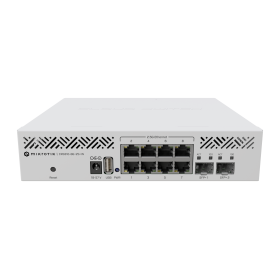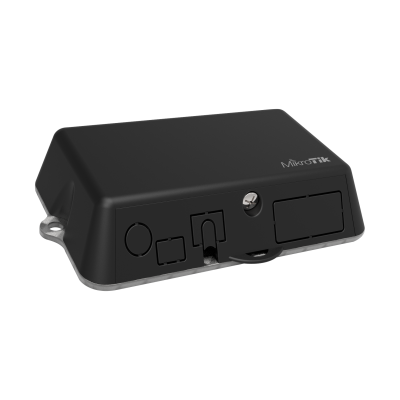


MikroTik LtAP mini LTE kit 2024 GPS Vehicle Router
The MikroTik LtAP mini LTE kit (2024 refresh) is a compact weatherproof vehicle and mobile router — LTE Cat4 (150 Mbps down / 50 Mbps up) with 2G/3G fallback, integrated GPS, dual SIM slots, 2.4 GHz Wi-Fi 4 (802.11b/g/n, 300 Mbps, 2-chain), 1× 10/100 Ethernet, RS232 serial console, MiniPCIe expansion slot, triple power input (DC jack 8–30V, 802.3af/at PoE-in 12–57V, MicroUSB 5V), single-core MIPS QCA9531 at 650 MHz, 64 MB RAM, 16 MB FLASH, RouterOS v7 License 4, passive cooling, IP54, -40°C to +70°C, MTBF ~100,000 hours at 25°C. CE, E-MARK, EAC, and RoHS certified. 2024 refresh adds B28 (700 MHz) LTE band support.

We only offer IC Certified products. For international products, contact us.

Ship Charge Will Display As Free Until Ship Address / Location Is Provided To Calculate Ship Charge.
The MikroTik LtAP mini LTE kit (2024 refresh) is the updated generation of MikroTik's most compact vehicle and mobile cellular router — a device that has shipped across multiple generations specifically for deployments where a fixed broadband connection is unavailable or impractical and LTE connectivity must be delivered from a device that survives vehicle vibration, outdoor temperatures, and mounting in locations with no nearby power outlet. The 2024 refresh's single hardware change from the previous generation is the addition of LTE Band 28 (700 MHz) support — a band addition that is specifically significant for the Canadian market and must be called out prominently on the product page.
**LTE Band 28 (700 MHz) — the 2024 refresh's most important addition for Canada:**
LTE Band 28 (700 MHz APT) is deployed by Rogers, Bell, and Telus across Canada for rural and extended coverage LTE service. 700 MHz propagates significantly further than higher-frequency LTE bands (1800 MHz, 2100 MHz, 2600 MHz) at the same transmit power — it penetrates buildings and terrain obstacles more effectively and maintains usable signal at distances from cell towers where higher-frequency bands have already dropped below usable strength. For a vehicle router deployed in rural Canada — a farm vehicle, a forestry truck, a utility fleet asset, a transit bus operating on rural routes — Band 28 coverage is the difference between maintaining LTE connectivity in areas where previous-generation devices without Band 28 would fall back to 3G or lose cellular signal entirely. The 2024 refresh's addition of Band 28 is a direct Canadian market improvement over the previous-generation LtAP mini LTE kit. State this explicitly and prominently on the product page.
The full LTE band set of the EC200A-EU modem covers the primary Canadian carrier bands across all three major carriers (Rogers, Bell, Telus):
- **LTE FDD:** Band 1 (2100 MHz), Band 3 (1800 MHz), Band 5 (850 MHz), Band 7 (2600 MHz), Band 8 (900 MHz), Band 20 (800 MHz), Band 28 (700 MHz APT)
- **LTE TDD:** Band 38 (2600 MHz), Band 40 (2300 MHz), Band 41n (2500 MHz)
- **3G:** Bands 1/5/8 (2100/850/900 MHz)
- **2G:** Bands 3/8 (1800/900 MHz)
Canadian carrier LTE band assignments (as of 2026): Rogers primarily uses Band 4 (AWS-1, 1700/2100 MHz), Band 7 (2600 MHz), and Band 12/17/29 variants in different spectrum holdings. Bell and Telus use Band 2, Band 4, Band 5, Band 7, and Band 17 in addition to 700 MHz holdings. **Important caveat:** The EC200A-EU modem's band list (FDD B1/3/5/7/8/20/28) does not include Band 4 (AWS-1, 1700 MHz), which is a primary Canadian LTE band for Rogers and Bell. Confirm Band 4 coverage and carrier compatibility with your distributor and SIM provider before deploying the LtAP mini LTE kit on Canadian carrier networks — a device without Band 4 may experience reduced LTE availability on Rogers and Bell networks in urban and suburban coverage areas where Band 4 is the primary LTE carrier. Band 28 support improves rural coverage; Band 4 absence may limit urban LTE performance on some carriers. State this candidly on the product page — it is a deployment-critical consideration for Canadian buyers.
The dual SIM slot architecture is the operational resilience feature for vehicle and mobile deployments. Two active SIM slots allow the operator to install SIM cards from two different carriers — for example, Rogers in one slot and Bell or Telus in the other. RouterOS manages automatic SIM failover: if the active SIM loses signal or data connectivity, RouterOS switches to the backup SIM without operator intervention. For a vehicle operating across Canada where carrier coverage varies significantly by geography — Rogers coverage in urban Ontario, Bell coverage in Quebec, Telus coverage in British Columbia and Alberta rural areas — dual SIM failover extends effective LTE coverage without manual SIM swapping. The LtAP mini LTE kit's dual SIM capability is a direct competitive differentiator over single-SIM LTE routers at this price point.
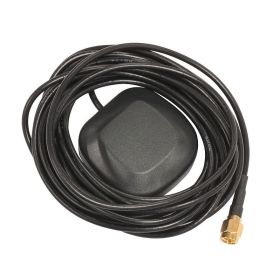
The integrated GPS is the asset tracking and fleet management feature. A uUFL connector accepts an external GPS antenna — MikroTik recommends the ACGPSA (IP67-rated active GPS antenna) for outdoor vehicle deployments. RouterOS reads the GPS module's NMEA data and exposes it to RouterOS scripts, the built-in GPS tracking application, and third-party tracking platforms via RouterOS's GPS reporting functions. MikroTik provides a tracking application example in RouterOS documentation — a starting point for real-time vehicle location reporting to a central management server, a fleet management platform, or a custom mapping application. For a Canadian fleet operator managing vehicles across a geographically dispersed coverage area, the LtAP mini's integrated GPS + LTE reporting capability means every vehicle is a connected, trackable asset without additional hardware. The GPS antenna is not included — the ACGPSA is the recommended accessory and should be cross-listed on this product page.
The 2.4 GHz Wi-Fi 4 radio (802.11b/g/n, 300 Mbps max, 2-chain, 1.5 dBi) creates a local Wi-Fi hotspot from the LTE uplink connection — passengers in a vehicle, workers in a mobile command unit, or field technicians in a service truck connect to the LtAP mini's Wi-Fi SSID and receive internet connectivity via the LTE uplink. RouterOS manages the hotspot configuration, per-client bandwidth limiting, captive portal, and SSID/security settings. The 1.5 dBi antenna gain is modest — the Wi-Fi radio is designed for in-vehicle or close-proximity coverage, not wide-area outdoor distribution. For vehicle cabin Wi-Fi coverage, the 1.5 dBi integrated antenna is sufficient. For extended outdoor coverage from a stationary deployment, an external Wi-Fi antenna via a compatible connector (confirm connector type from brochure) would improve coverage radius.
The RS232 serial console port is the hardware differentiator for industrial and transit deployments. RS232 serial provides direct RouterOS console access without a network connection — essential for field debugging, configuration recovery, and initial setup in locations where network connectivity is not yet established. For a device installed in a vehicle or outdoor enclosure where physical network access is impractical, RS232 serial console access is the correct maintenance interface. The RS232 port also enables serial-to-Ethernet bridging via RouterOS — connecting legacy serial-interface devices (industrial sensors, POS terminals, GPS units) to the LtAP mini's network and forwarding their serial data over LTE to a central server.
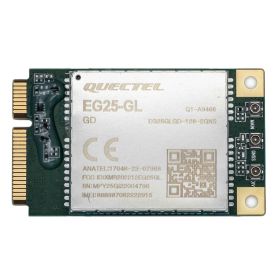
The MiniPCIe expansion slot provides hardware upgrade capability — a different cellular modem card (confirming RouterOS compatibility) can be installed to replace or supplement the included EC200A-EU LTE module. The internal uUFL connectors for the LTE antennas are accessible — the included connectors can be disconnected and replaced with external LTE antenna cables (SMA or other connector type — confirm from brochure) for installations where internal antenna gain is insufficient. For a vehicle with a metal roof that attenuates the internal LTE antennas, an external roof-mount LTE antenna connected via the uUFL connectors is the correct improvement.
Triple power input is the installation flexibility feature that makes the LtAP mini deployable in almost any vehicle or outdoor power scenario:
- **DC jack (8–30V):** Connect directly to a 12V or 24V vehicle battery or DC power supply — the standard vehicle electrical system power input. The included external DC cable provides the correct connector for vehicle power integration.
- **802.3af/at PoE-in (12–57V):** Power from a PoE switch or the included PoE injector — for fixed outdoor or indoor deployments where PoE infrastructure is available at the mounting point. The included PoE injector provides out-of-box power flexibility.
- **MicroUSB 5V:** Power from any standard USB charger, power bank, or vehicle USB outlet — MikroTik explicitly notes that users have powered the LtAP mini from portable power banks for day-long deployments. For temporary or emergency deployments where no fixed power is available, a USB power bank provides 8W-capable power for the full LtAP mini operating load.
Maximum power consumption is 8W — the lowest combined LTE + Wi-Fi + router power draw in this product batch. For a device running from a vehicle battery, 8W is negligible relative to the vehicle's electrical system capacity. On a 10,000 mAh 5V USB power bank (50Wh), the LtAP mini at 8W theoretical maximum draws approximately 6.25 hours of runtime — sufficient for a full field workday on a single power bank charge.
The E-MARK certification is the standout certification addition on this product — and it is uniquely absent from every other MikroTik device in this product batch. E-MARK (ECE Regulation No. 10) is the European automotive electromagnetic compatibility certification for electronic equipment installed in vehicles. E-MARK is required for vehicle-installed electronic devices in European Union member states and is recognised by many automotive OEMs and fleet operators globally as a quality and compatibility standard for vehicle-grade electronics. For Canadian fleet operators who specify vehicle electronics to European automotive standards, or for fleet vehicles that operate in both North American and European markets, E-MARK certification is a meaningful specification. No other device in this product batch carries E-MARK.
**Canadian market advisory — IC certification not present:**
Certifications are CE, E-MARK, EAC, and RoHS — no FCC or IC (ISED). The LtAP mini LTE kit is an active wireless device with both an LTE cellular radio and a 2.4 GHz Wi-Fi radio. Both radio components require IC certification for sale and operation in Canada under ISED regulations. This is a higher-priority certification gap than for the wired devices in this batch — active cellular and Wi-Fi transmitters require explicit IC certification. Confirm IC certification status from your MikroTik distributor before listing for the Canadian market. The -EU product code suffix on the EC200A-EU modem indicates a European-market variant — confirm whether a North American modem variant with FCC/IC certification exists, or whether the EU variant carries IC certification for the Canadian market. This is the most significant regulatory advisory in this product batch for a Canadian reseller.
Key specifications:
- **Architecture:** MIPSBE
- **CPU:** QCA9531, single-core, 650 MHz
- **RAM:** 64 MB
- **Storage:** 16 MB FLASH
- **OS:** RouterOS v7, License 4
- **Wi-Fi 2.4 GHz:** 802.11b/g/n, Wi-Fi 4, 2-chain, 300 Mbps max, 1.5 dBi, QCA9531
- **LTE modem:** EC200A-EU, Cat4 — 150 Mbps DL / 50 Mbps UL
- **LTE MIMO:** DL 2×2, UL 1×1
- **LTE FDD bands:** 1, 3, 5, 7, 8, 20, 28
- **LTE TDD bands:** 38, 40, 41n
- **3G bands:** 1, 5, 8
- **2G bands:** 3, 8
- **SIM slots:** 2× Mini SIM
- **GPS:** Integrated, uUFL external antenna connector
- **Ethernet:** 1× 10/100 Mbps
- **Serial:** RS232 console port
- **MiniPCIe:** 1× slot
- **Power inputs:** DC jack 8–30V, 802.3af/at PoE-in 12–57V, MicroUSB 5V
- **Max power consumption:** 8W
- **Cooling:** Passive
- **IP rating:** IP54
- **Operating temperature:** -40°C to +70°C
- **MTBF:** ~100,000 hours at 25°C
- **Mode button:** Yes
- **Certifications:** CE, E-MARK, EAC, RoHS — no FCC, no IC published
- **Included:** External DC cable, K-55 screw kit, 24V 0.38A power adapter, PoE injector
- **Product code:** RB912R-2nD-LTm&EC200A-EU
- **Suggested price:** USD 99.00
Note: EC200A-EU modem — European band variant. Confirm Canadian carrier LTE band compatibility (particularly Band 4 / AWS-1) before deployment. No IC (ISED) certification published — confirm with distributor before listing in Canada. External GPS antenna not included — ACGPSA recommended. Wi-Fi is 2.4 GHz only — no 5 GHz radio.

- Product code
- RB912R-2nD-LTm&EC200A-EU
- Architecture
- MIPSBE
- CPU
- QCA9531
- CPU core count
- 1
- CPU nominal frequency
- 650 MHz
- RouterOS License
- 4
- Operating System
- RouterOS v7
- Size of RAM
- 64 MB
- Storage size
- 16 MB
- Storage type
- FLASH
- MTBF
- Approximately 100'000 hours at 25C
- Tested ambient temperature
- -40°C to 70°C
- Number of DC inputs
- 3 (MicroUSB, DC jack, PoE-IN)
- DC jack input Voltage
- 8-30 V
- Max Power consumption
- 8 W
- Cooling type
- Passive
- PoE in
- 802.3af/at
- PoE in input Voltage
- 12-57 V
- 3G Category
- R7 (21Mbps Downlinks, 5.76Mbps Uplink)
- 3G bands
- 5 (850MHz) / 8 (900MHz) / 1 (2100MHz)
- GNSS standards
- GPS
- 10/100 Ethernet ports
- 1
- Number of SIM slots
- 2 Modem (Mini SIM)
- Serial port
- RS232
- Wireless 2.4 GHz Max data rate
- 300 Mbit/s
- Wireless 2.4 GHz number of chains
- 2
- Wireless 2.4 GHz standards
- 802.11b/g/n
- Antenna gain dBi for 2.4 GHz
- 1.5
- Wireless 2.4 GHz chip model
- QCA9531
- MicroUSB input Voltage
- 5 V
- MiniPCI-e slots
- 1
- 2G Category
- Class12
- LTE Category
- 4 (150Mbps Downlink, 50Mbps Uplink)
- LTE FDD bands
- 20 (800MHz) / 8 (900 MHz) / 3 (1800MHz) / 1 (2100MHz) / 7 (2600MHz) / 5 (850MHz) / 28 (700MHz)
- LTE TDD bands
- 40 (2300MHz) / 38 (2600MHz) / 41n (2500MHz)
- MIMO DL
- 2x2
- MIMO UL
- 1x1
- TAC
- 86314105
- Wireless 2.4 GHz generation
- Wi-Fi 4
- Certification
- CE, E-MARK, EAC, ROHS
- 2G bands
- 8 (900MHz) / 3 (1800MHz)
- Mode button
- Yes
- IP
- IP54